← All demos · API · 20 screens · example data
Partner integrations
A brand's channel-partner leads become SurgePV projects on their own, and proposals and status flow back
The brand's view
API01
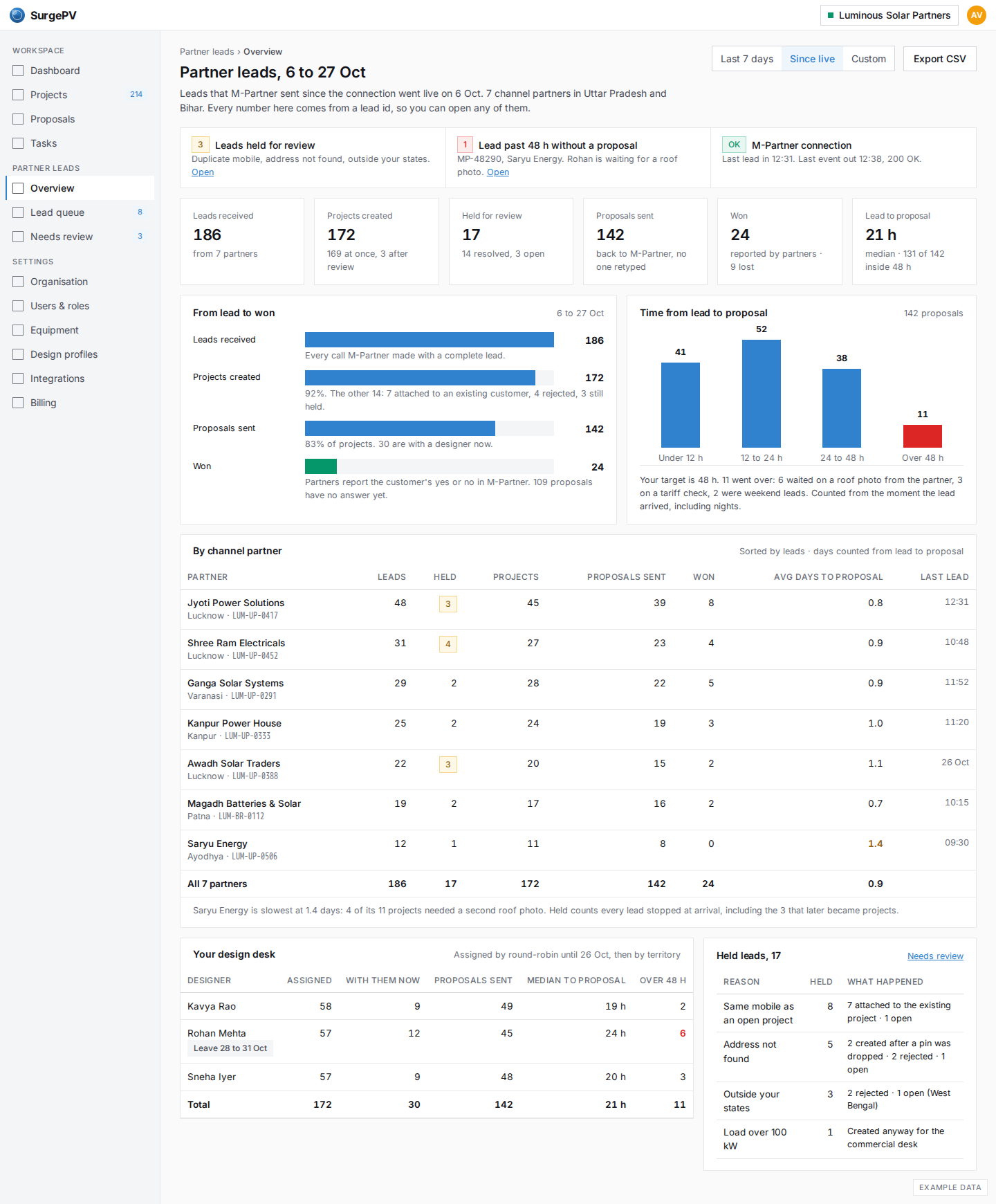
Partner leads at a glance
Luminous's view of three weeks of channel-partner leads: 186 in, 172 projects, 142 proposals sent back, 24 won, 21 hours median from lead to proposal. Below, every partner and every designer with the same numbers.
API02
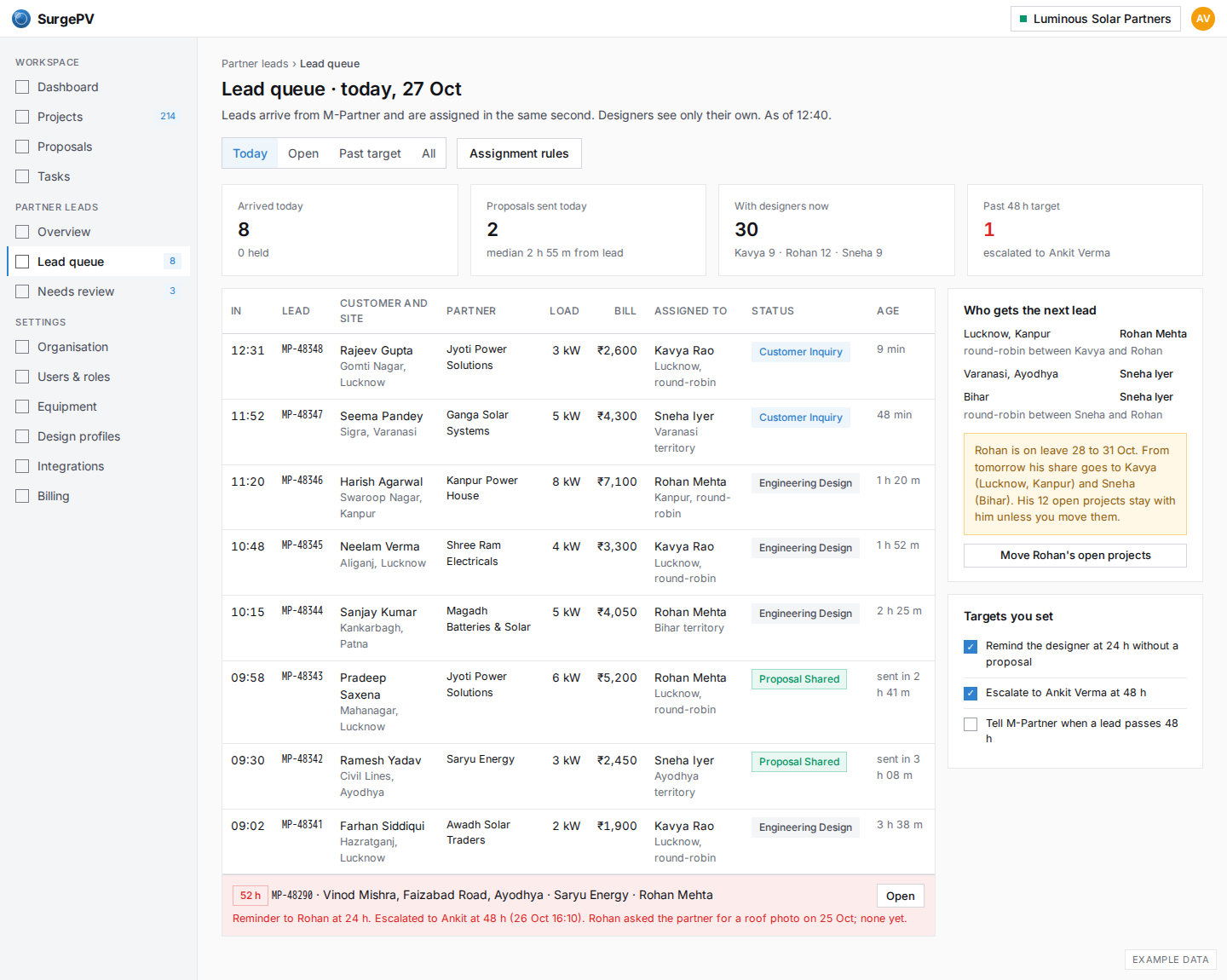
Today's lead queue and who got each one
Leads arrive from M-Partner and are given to a designer in the same second, by territory and then in turn. One lead is past the 48-hour target and has been escalated; one designer's leave is already planned for.
One lead's round trip
API03
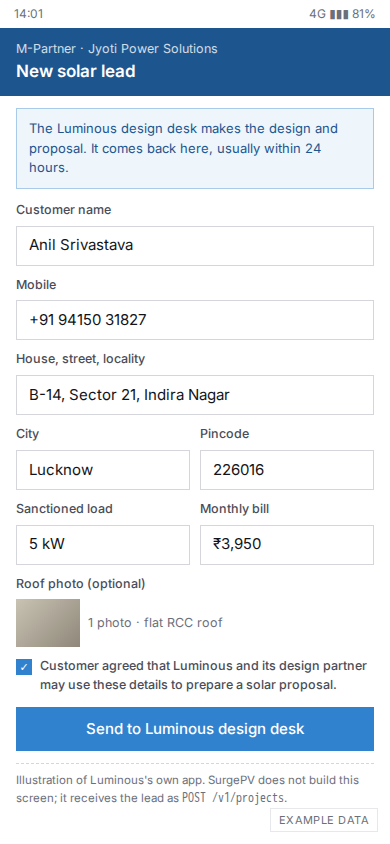
Phone: the partner enters a lead
Rakesh at Jyoti Power Solutions, Lucknow, enters Anil Srivastava's details in M-Partner, Luminous's own app. One tap sends it to the Luminous design desk in SurgePV.
API04
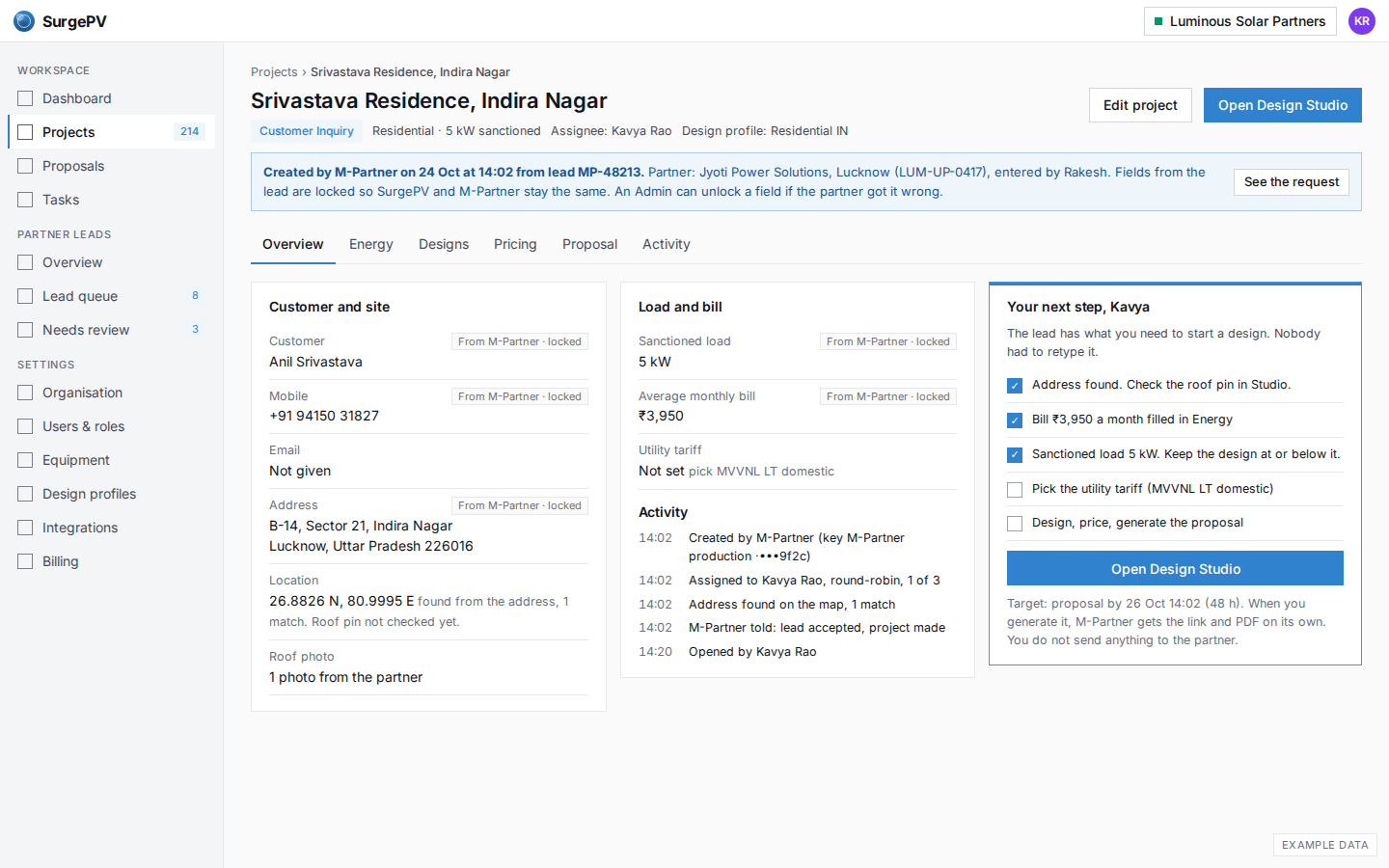
The lead is now a SurgePV project
The designer, Kavya Rao, sees a normal project in its first status, Customer Inquiry, with where it came from, the partner's fields locked, the address already on the map and a checklist of what is left.
API05
Proposal ready, sent back on its own
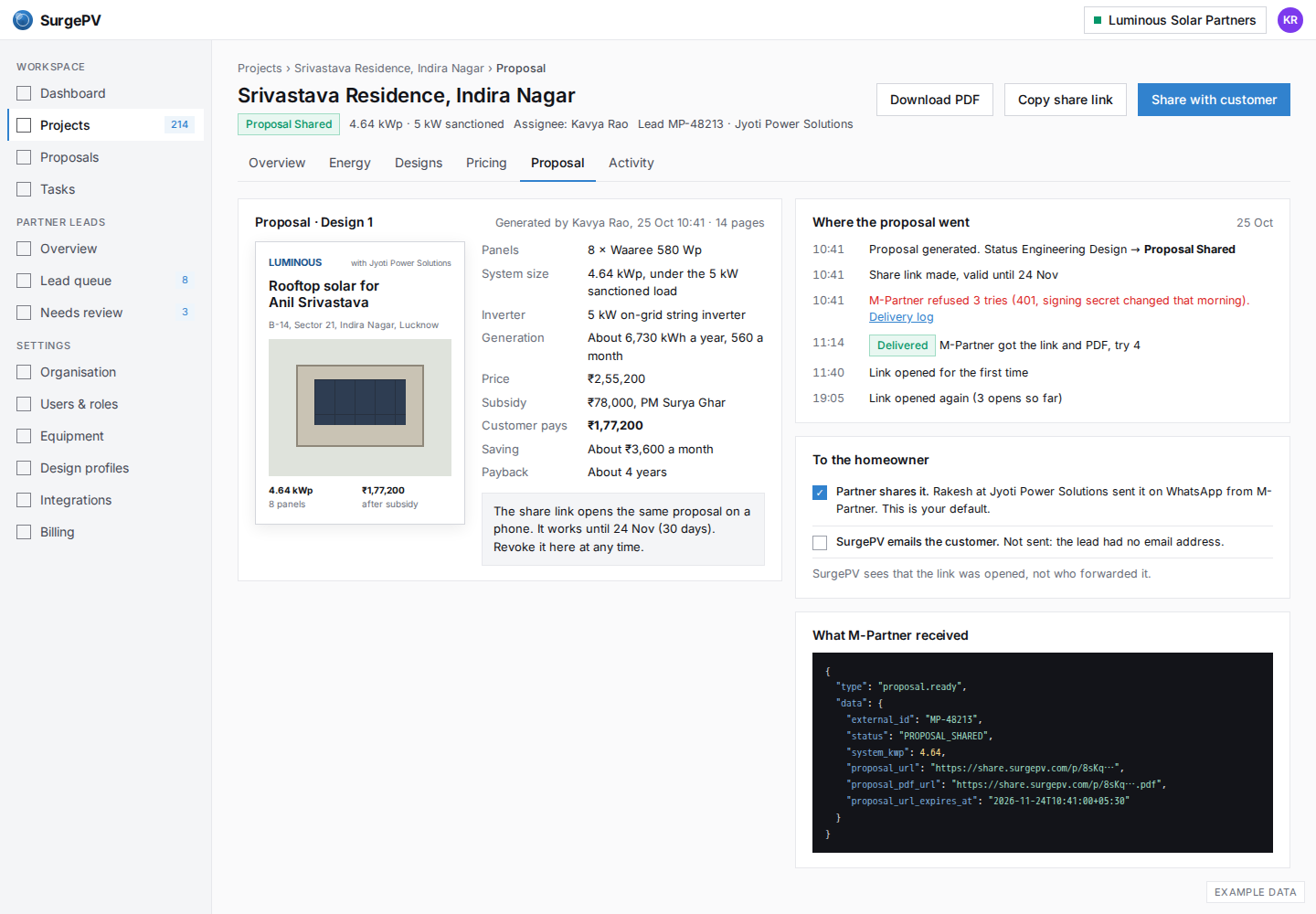
Kavya generates the proposal: 8 Waaree 580 Wp panels, 4.64 kWp, ₹1,77,200 after subsidy. SurgePV sends M-Partner the share link and PDF, and the page shows every step, including three refused tries before it got through.
API06
Phone: the partner's app after the proposal arrives
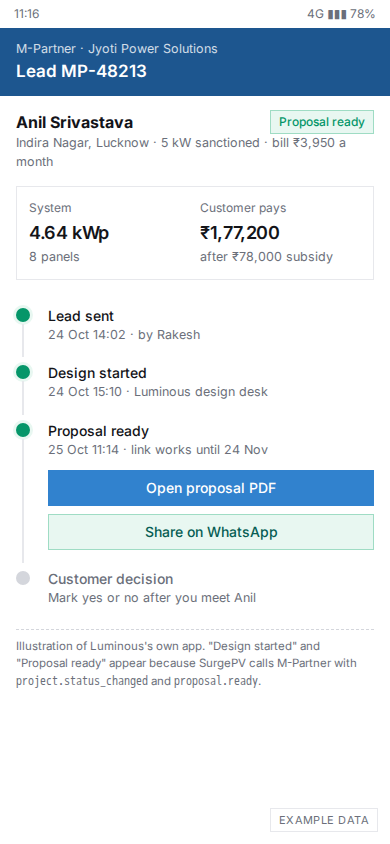
The same lead in M-Partner a day later: design started, proposal ready with size and price, a PDF button and a WhatsApp share button. The partner did not call anyone to get it.
API07
Phone: what the homeowner gets
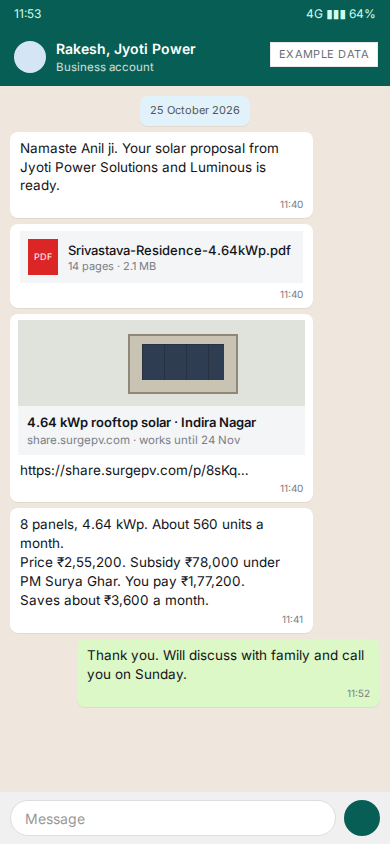
Anil Srivastava receives the proposal from his local partner on WhatsApp: the PDF, a link that opens the proposal on his phone until 24 Nov, and the price after subsidy in plain numbers.
Set up
API08
An API key, shown once
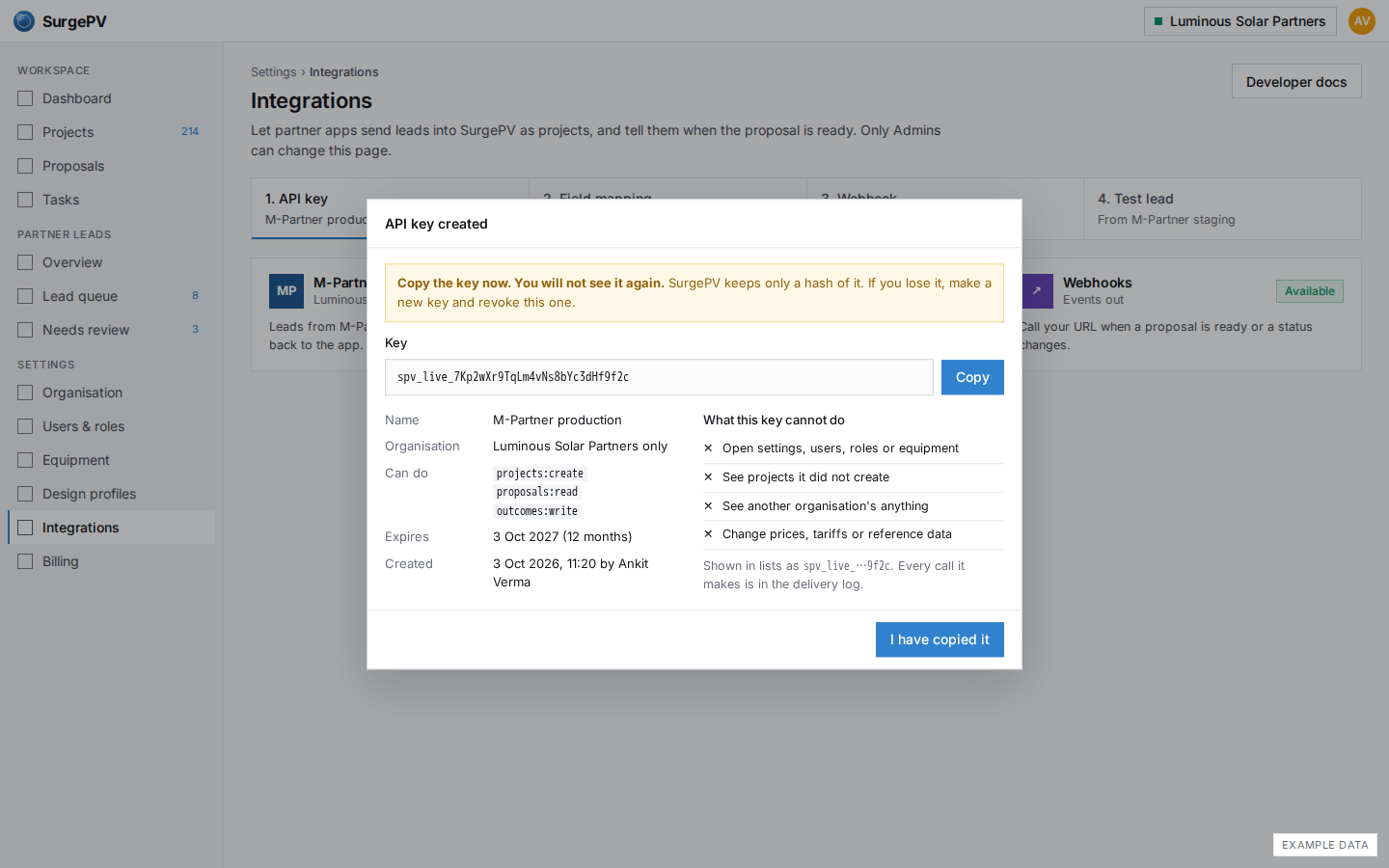
Luminous's Admin makes a key for M-Partner. It belongs to this organisation only, can do three things, expires in 12 months, and is shown once; SurgePV keeps only a hash.
API09
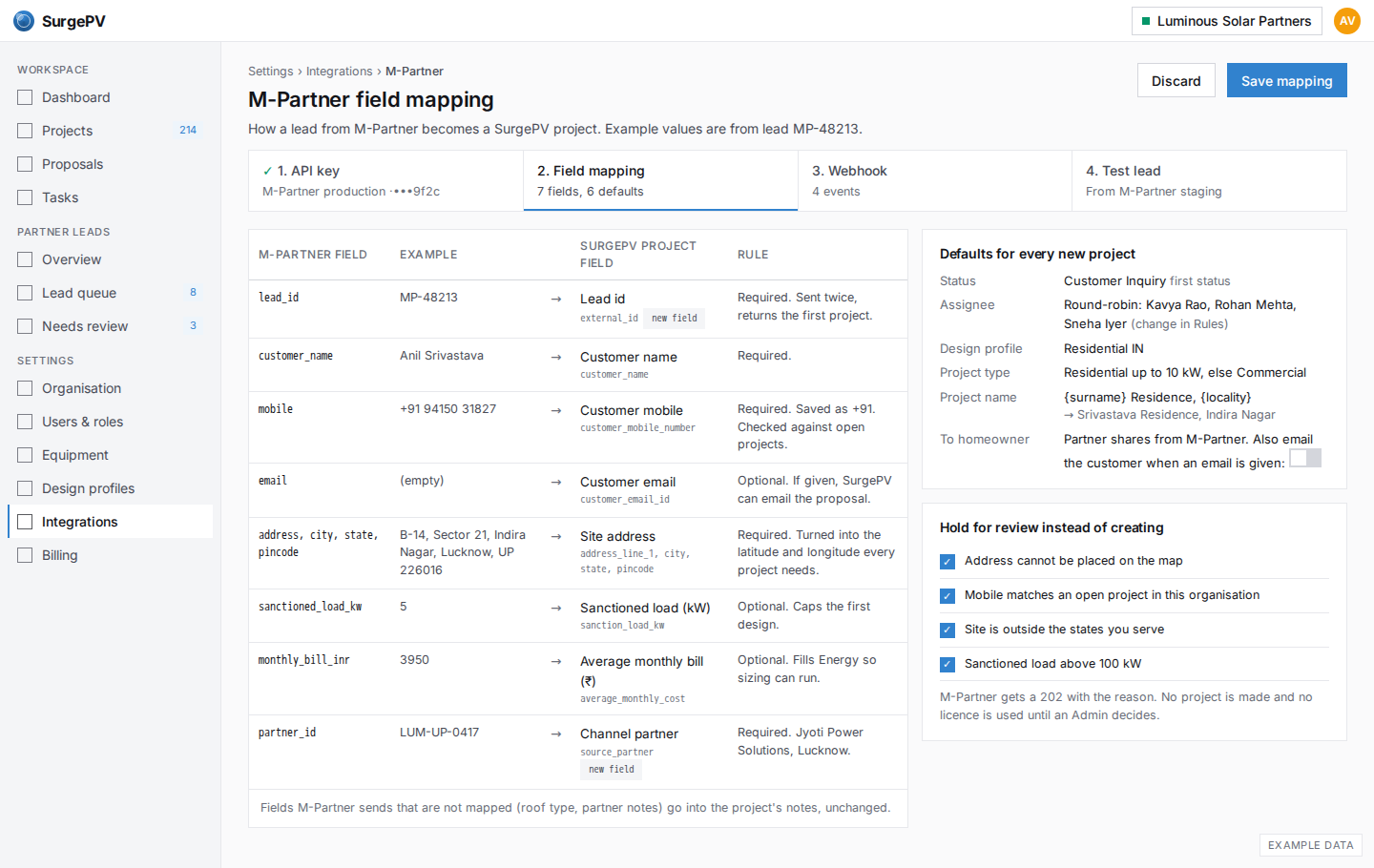
Field mapping with defaults
Each M-Partner field lands in a real SurgePV project field, with the example lead beside it. Defaults set the status, designer, design profile and project name, and four rules hold a lead instead of creating it.
API10
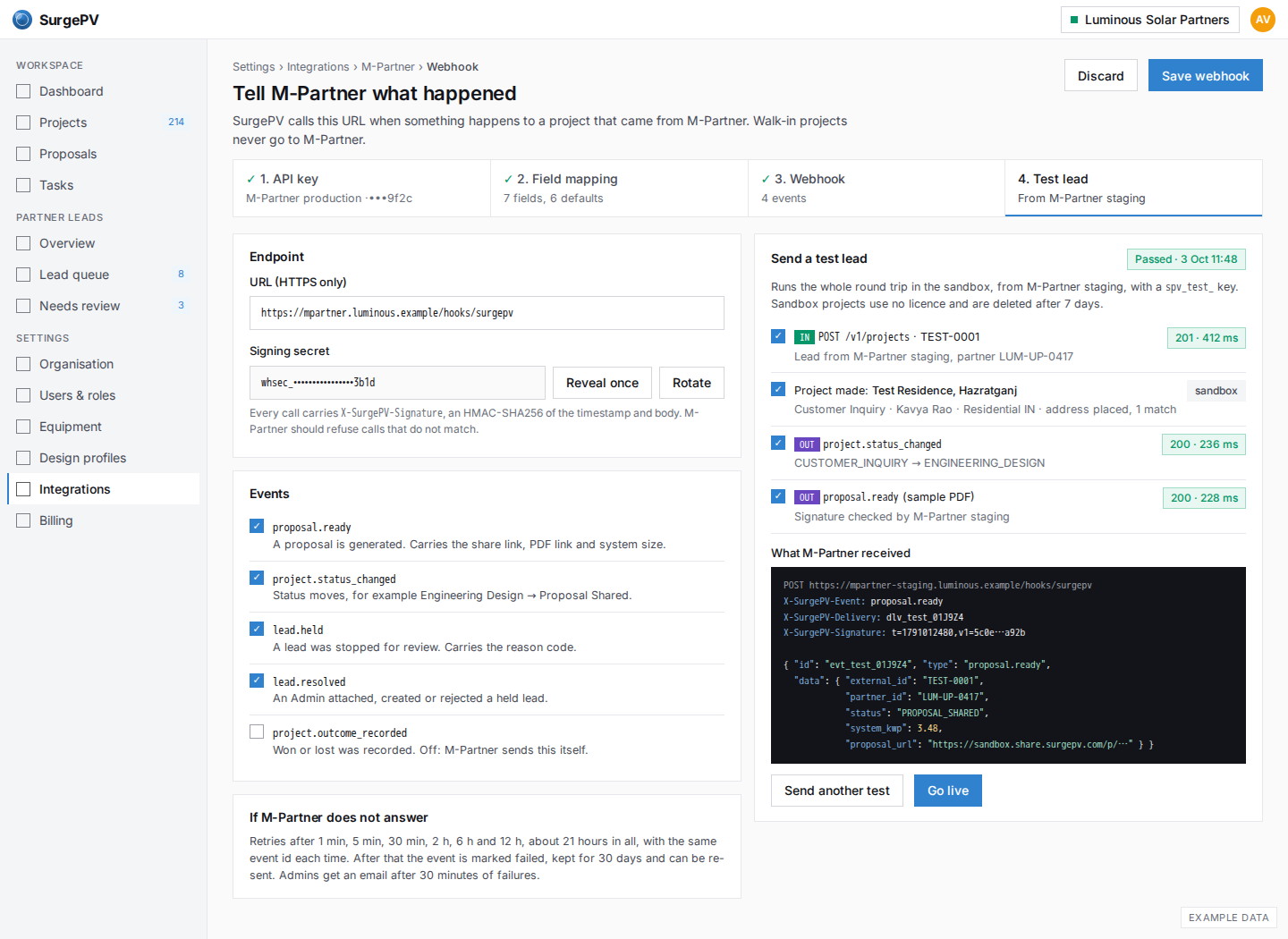
Webhook events and a test lead
Pick the events M-Partner should hear about and the URL to call. A test lead runs the whole trip in the sandbox, from a staging lead to a signed proposal.ready, before anything goes live.
API11
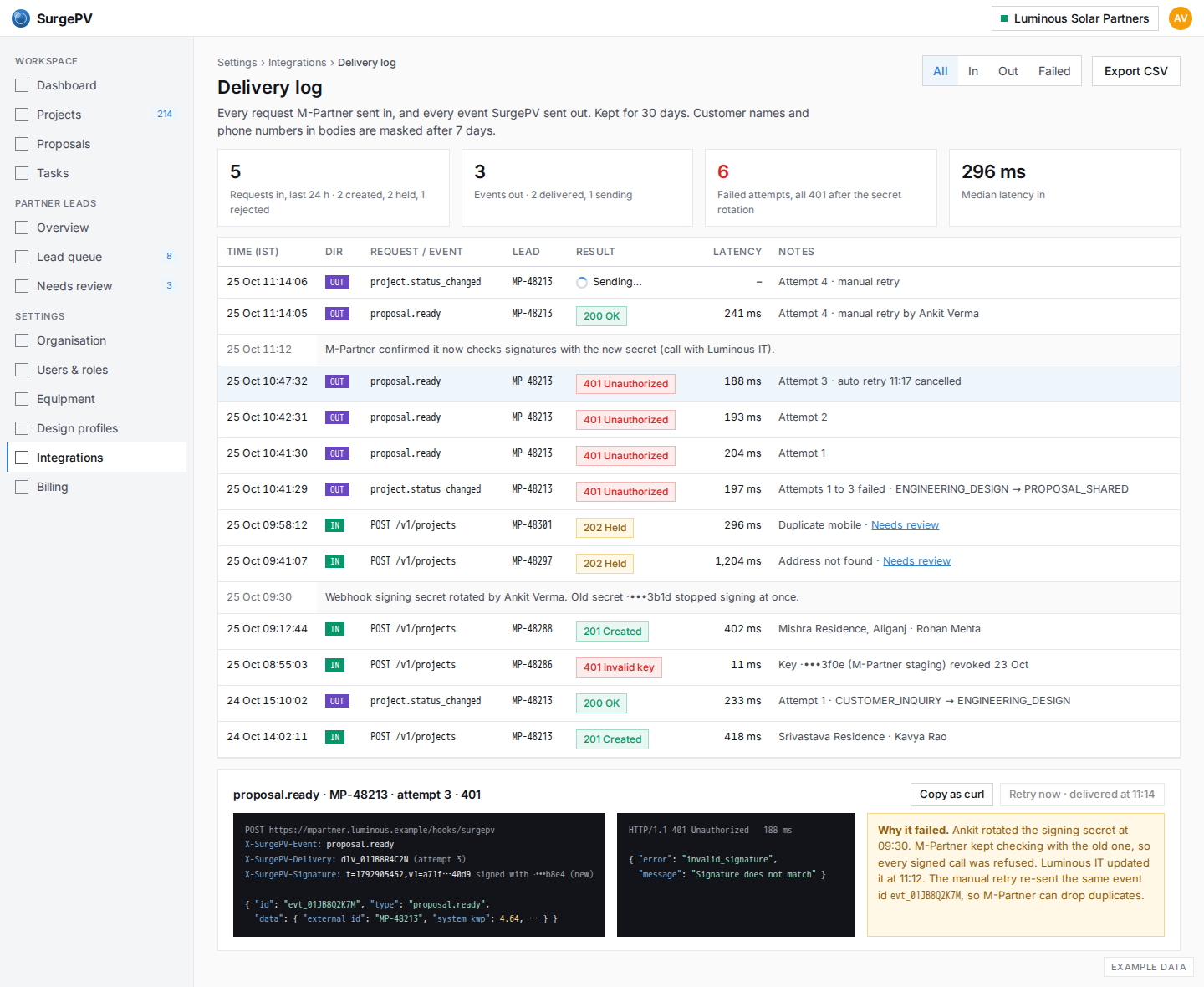
Delivery log: a failed delivery and the retry
Every lead in and every event out, on one timeline. After the signing secret changed, M-Partner refused three deliveries; once Luminous IT updated it, one click re-sent the same event and it went through.
Rules you control
API12
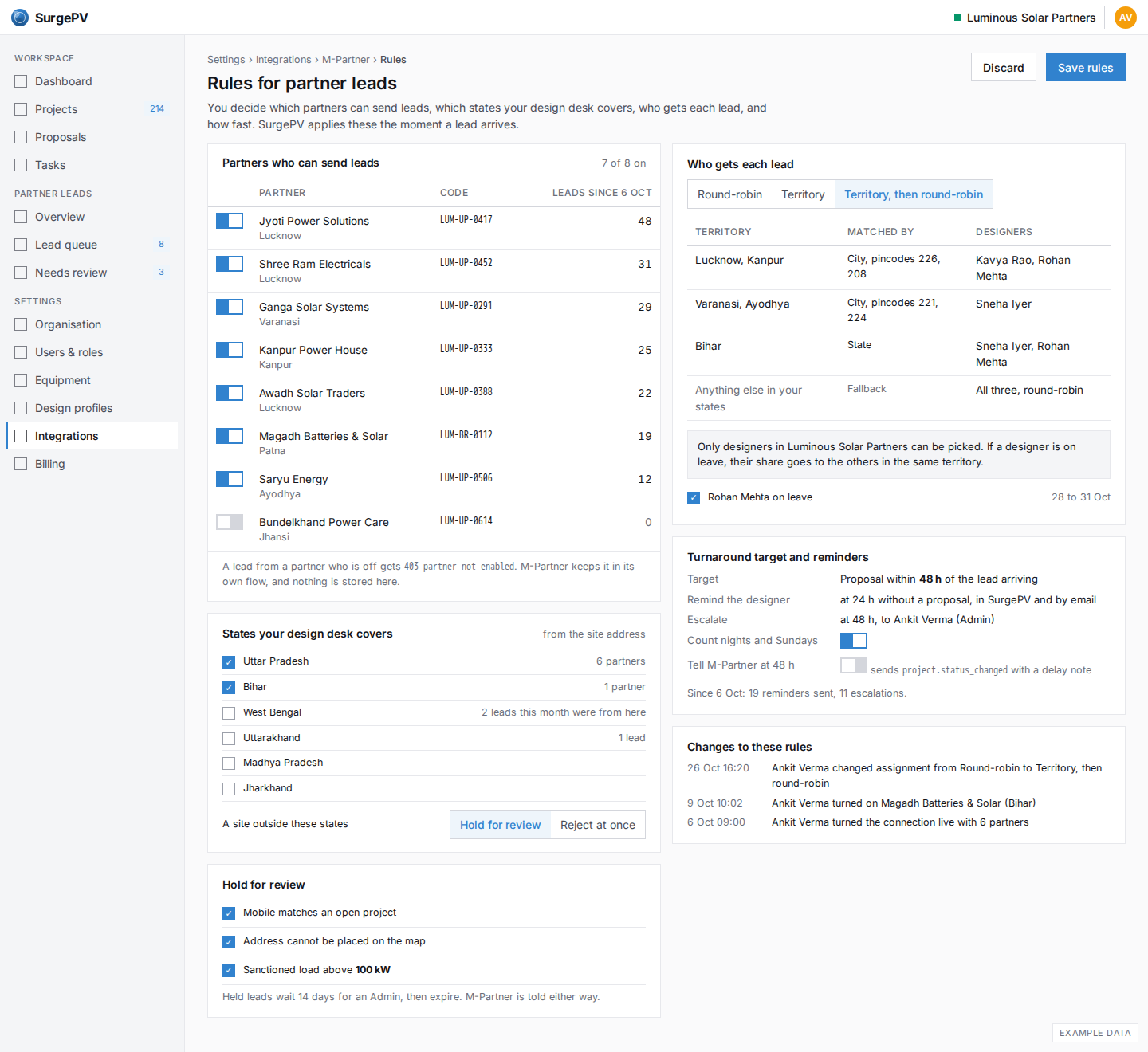
Which partners, which states, who gets each lead
Luminous decides which partners can send leads, which states its design desk covers, how leads are assigned (here by territory, then in turn), the 48-hour target with reminders and escalation, and what gets held.
API13
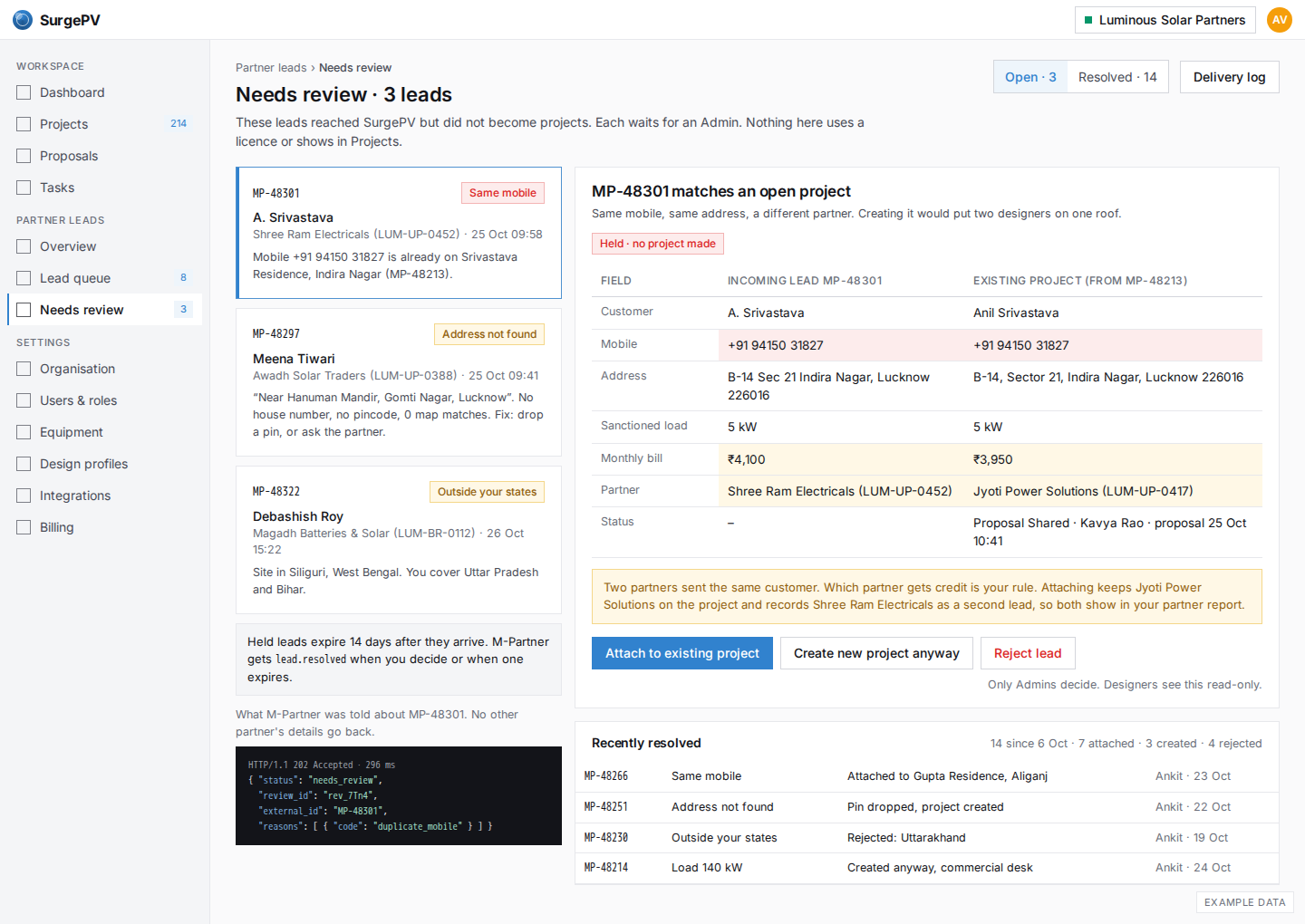
Held leads and how they are resolved
Three leads did not become projects: the same mobile from a second partner, an address that cannot be found, and a site outside the covered states. Side by side, the Admin attaches, creates or rejects, and M-Partner is told.
Your own CRM
API14
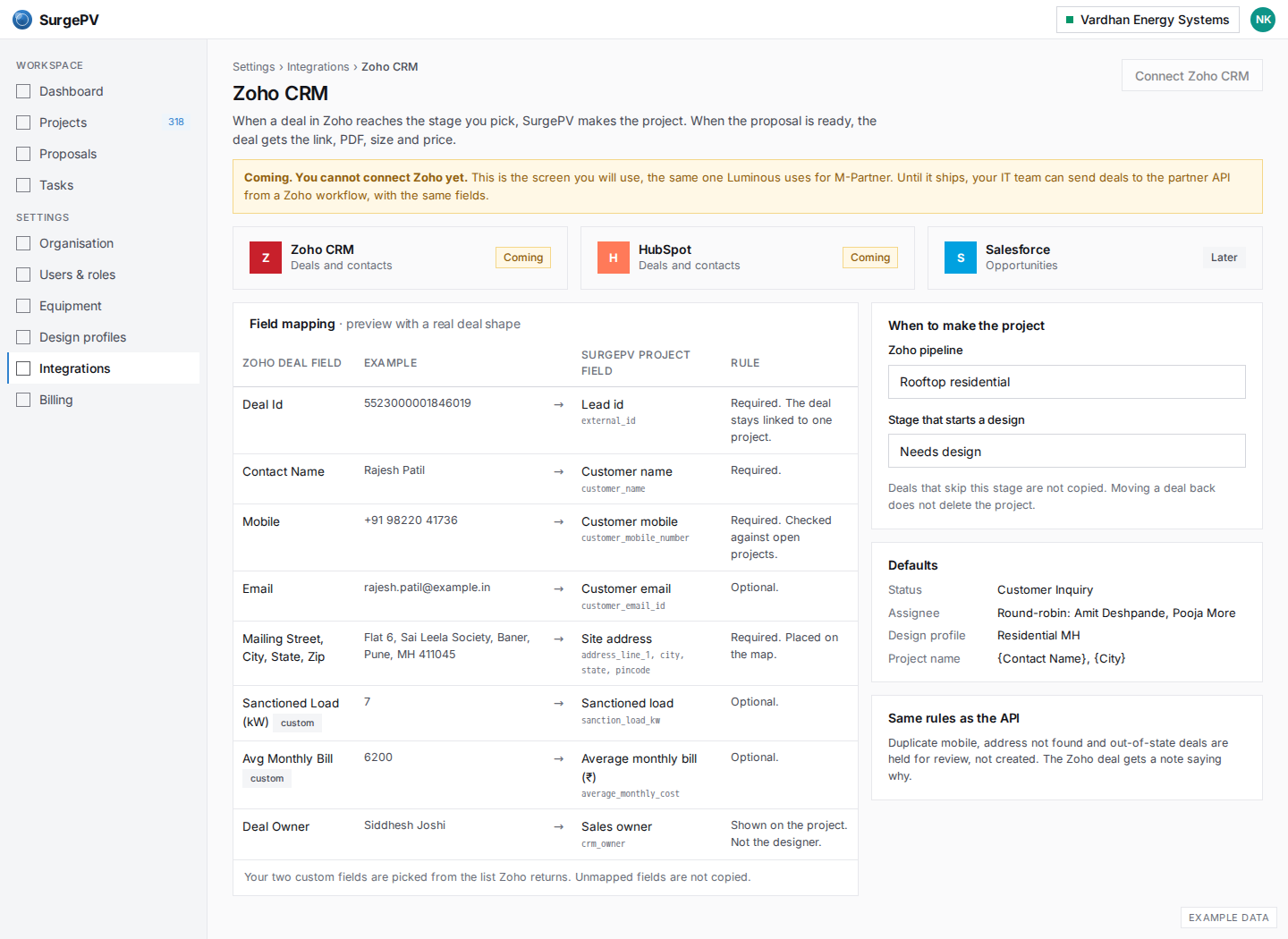
Zoho CRM: coming, same mapping screen
For an EPC that runs sales in Zoho, here Vardhan Energy Systems in Pune: pick the deal stage that starts a design and map the deal's fields. It is the same screen as M-Partner, marked Coming.
API15
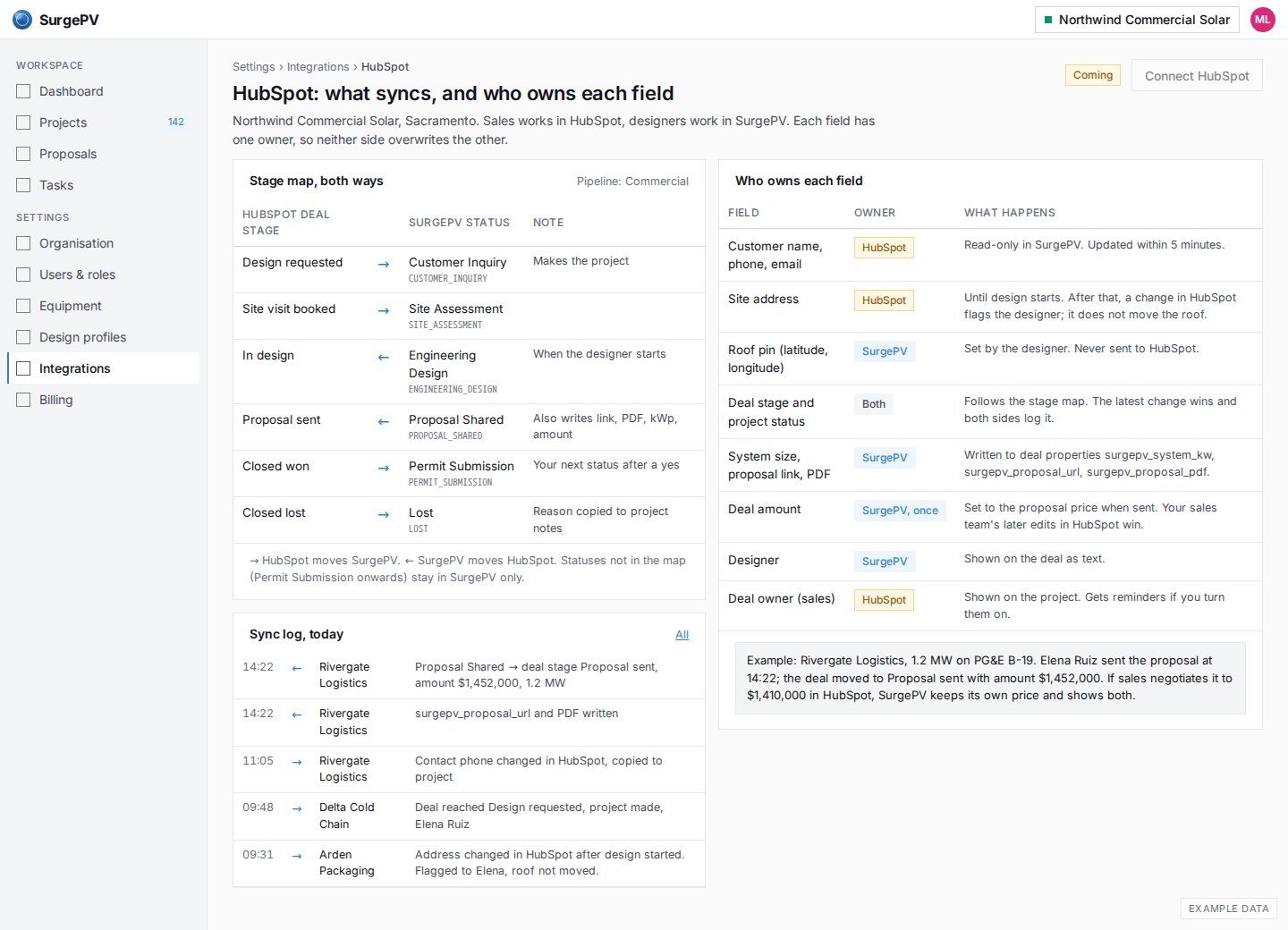
Status both ways, and who owns each field
For a US EPC on HubSpot, Northwind Commercial Solar: deal stages and SurgePV statuses mapped in both directions, and one owner per field, so sales edits in HubSpot and designer edits in SurgePV never overwrite each other.
Docs and security
API16
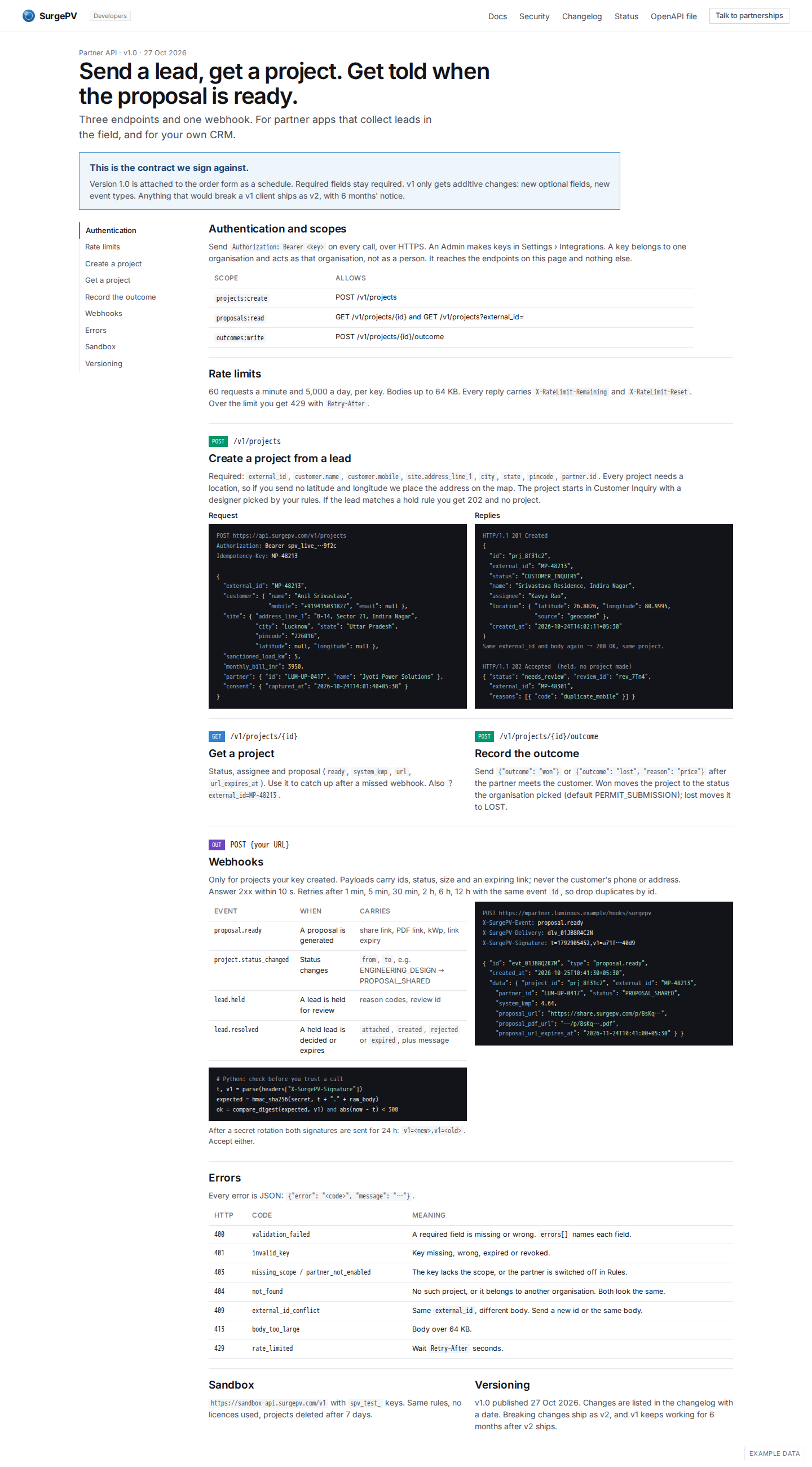
Developer docs: the contract
The public page an IT team builds against: authentication and scopes, rate limits, create, get and outcome endpoints with real examples, webhooks with signature checks, errors, sandbox and the rule that v1 only gets additive changes.
API17
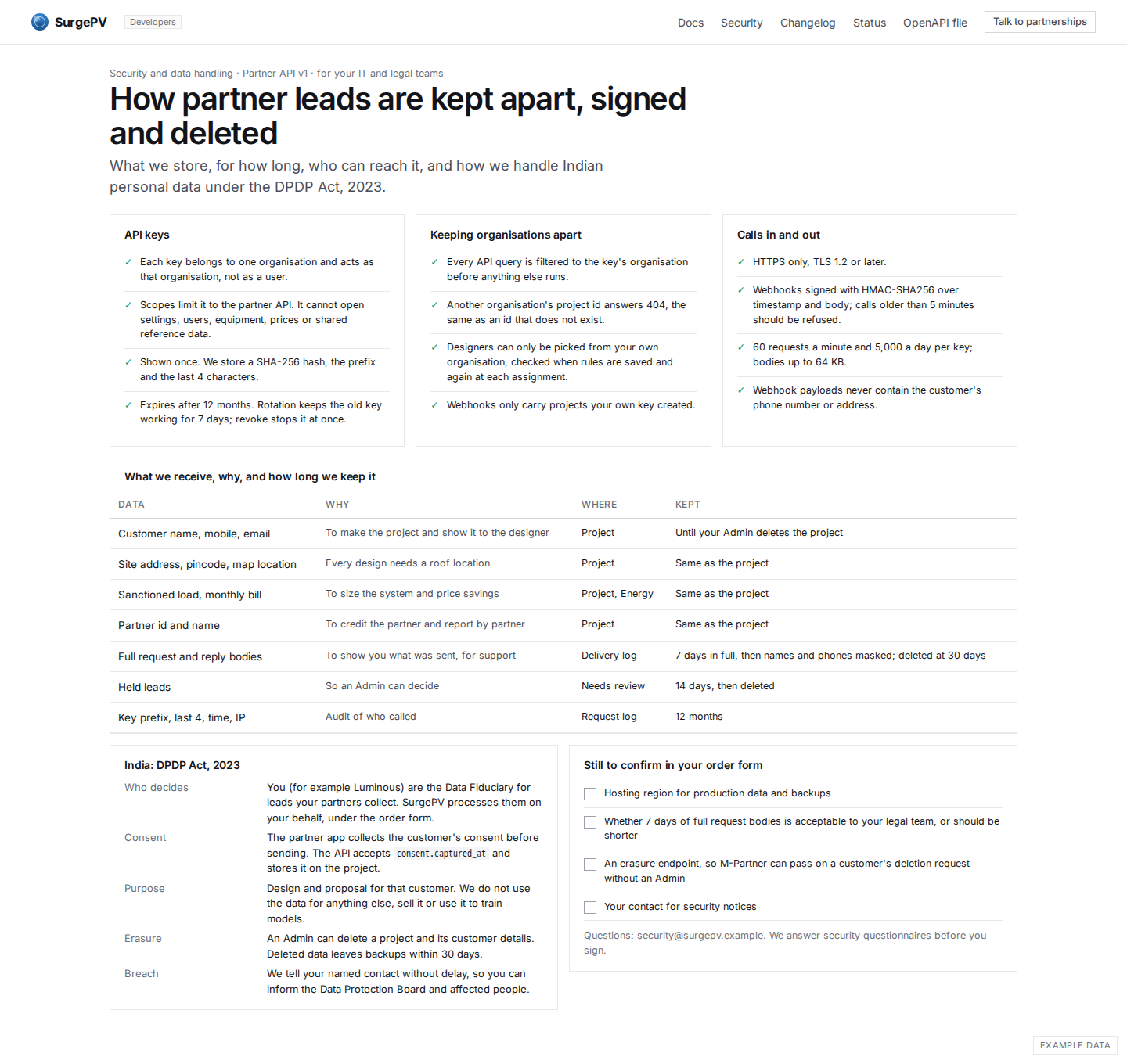
Security and data handling
For the buyer's IT and legal teams: keys scoped to one organisation and stored hashed, organisations kept apart, signed webhooks, rate limits, what data is kept and for how long, and how the DPDP Act, 2023 roles split.
When things go wrong
API18
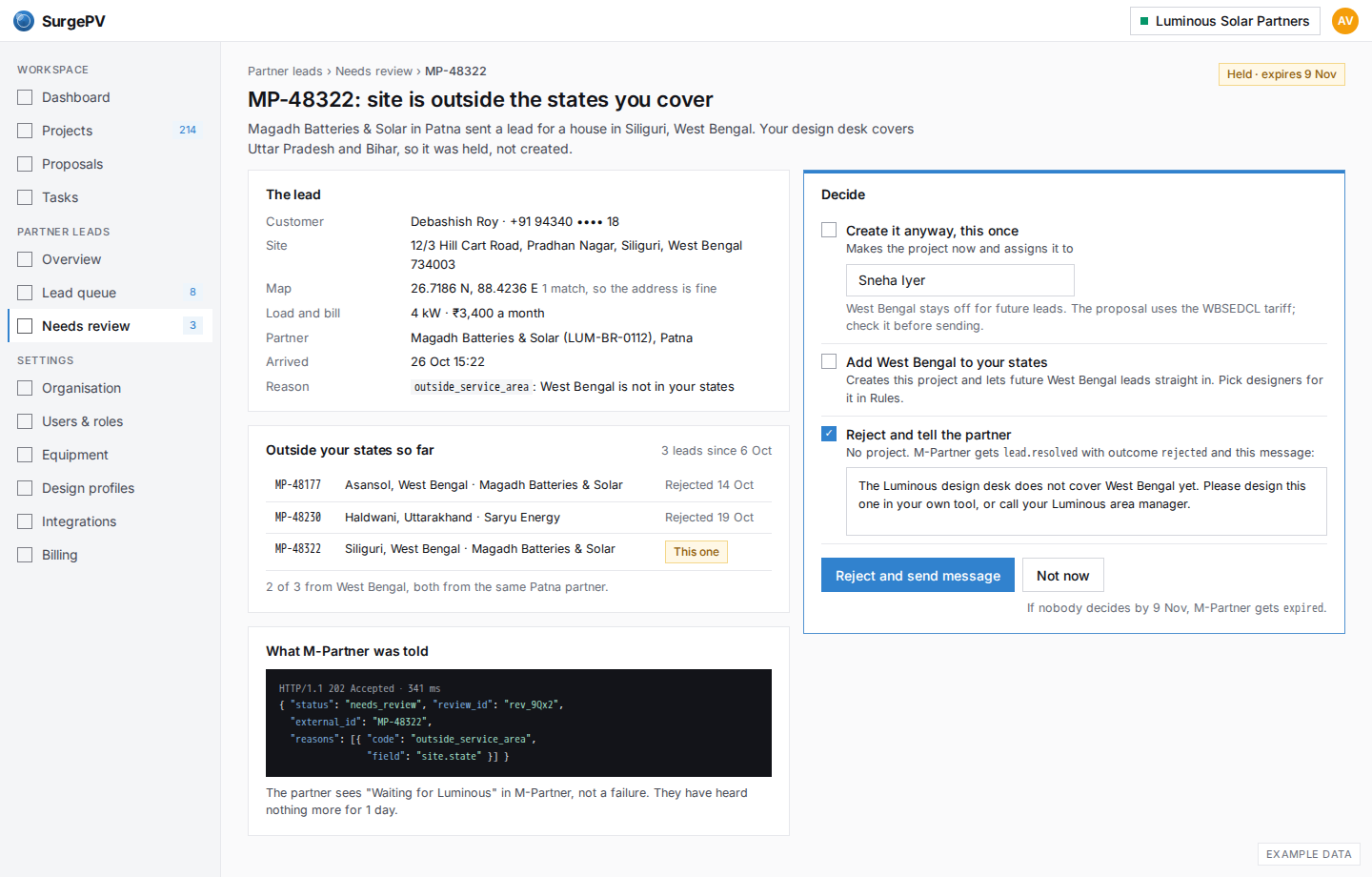
A lead from outside your states
A Bihar partner sends a lead for a house in West Bengal, which the design desk does not cover. It is held, not created. The Admin can make it once, add the state, or reject it with a message that goes back to the partner.
API19
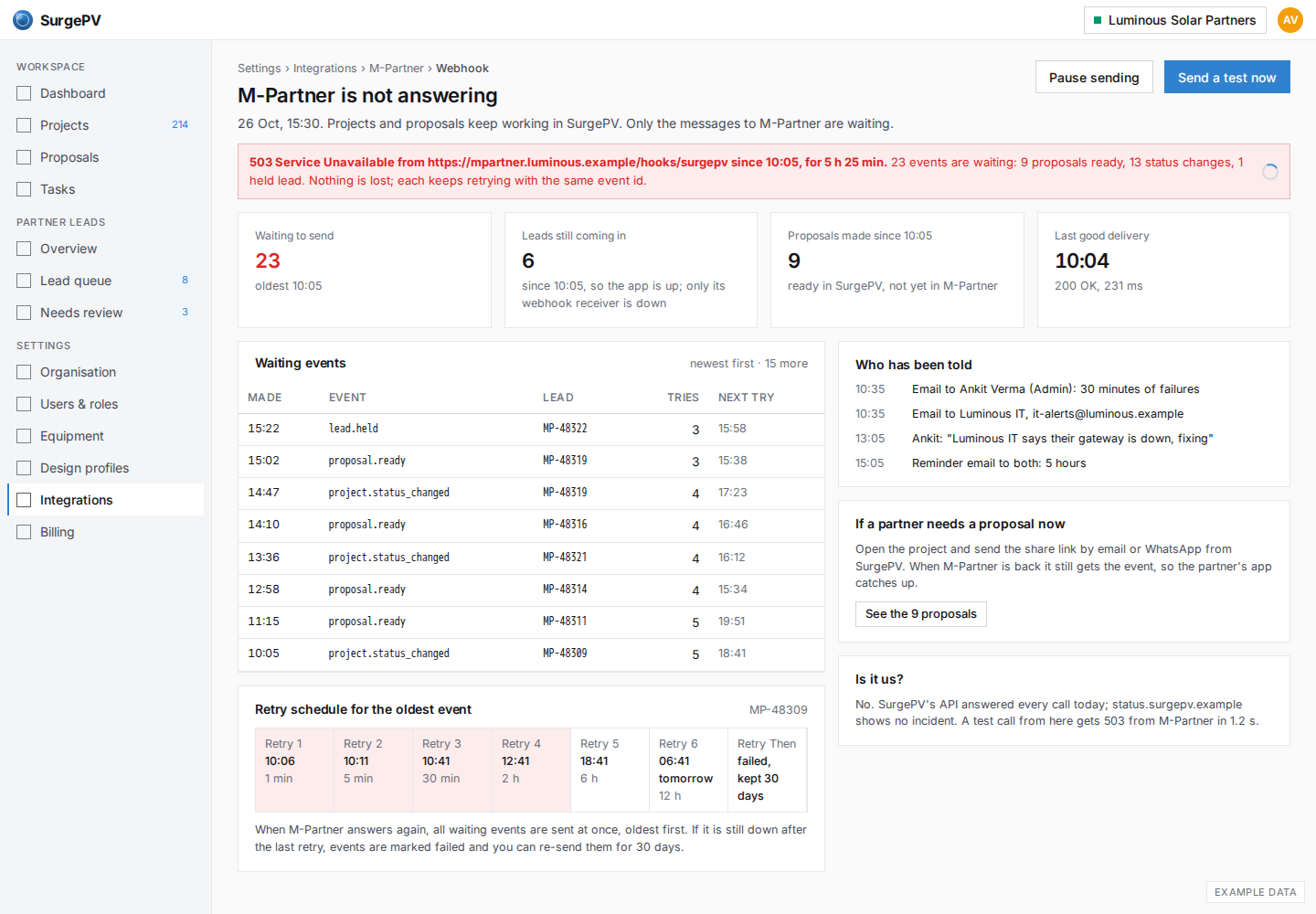
M-Partner's webhook down for five hours
M-Partner's receiver has answered 503 since 10:05. Leads still come in and designers keep working; 23 events wait and retry with the same ids. The page says who was told, when the next try is, and how to reach a partner in the meantime.
API20
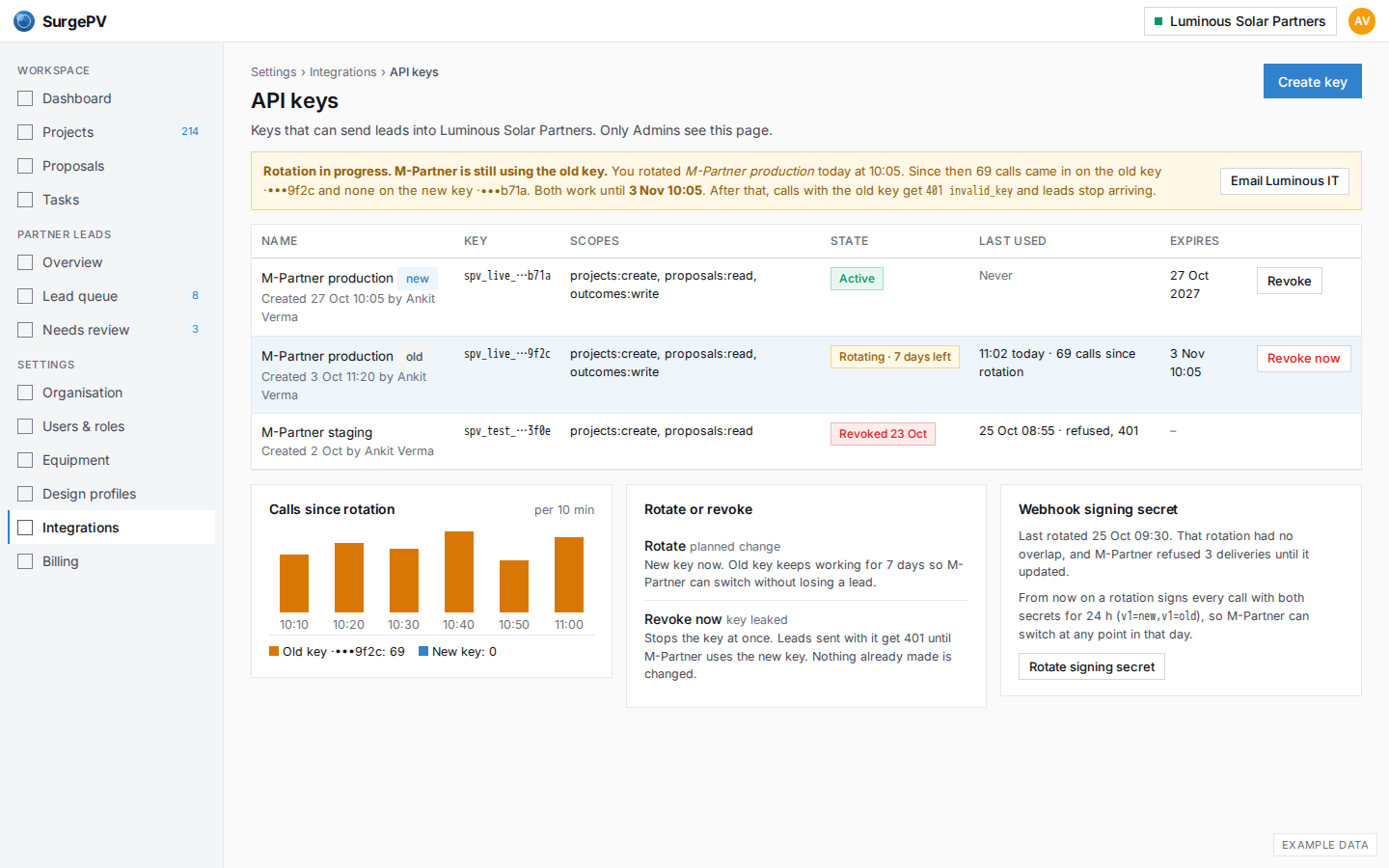
Key rotated, partner still on the old one
The Admin rotated the M-Partner key this morning. 69 calls since then still used the old key, so the page warns before it stops working on 3 Nov. Rotate and revoke are explained side by side, and signing-secret rotation now overlaps for 24 hours.